


Product Description
2 Ladonna Dissima (2026) USHK92640502
3 Sally’s Song (from The Nightmare Before Christmas) USHK92639301
Frank Deserto – Post-punk.com says: Suzanne Perry’s latest EP continues where her work with seminal dream pop band Love Spirals Downwards left off. Perry’s voice still sounds as shimmering and sublime as ever especially on lead track “There’ll Be No More Promises,” a stunning piece of texture and mood that builds to an evocative climax. Along for the ride is an updated version of classic LSD track “Ladonna Dissima” from their first record and a cover of “Sally’s Song” from The Nightmare Before Christmas, which offer something fun and something familiar from one of dream pop’s most singular and powerful voices. |
Genres: Dream Pop, Ethereal, Darkwave
RIYL: Love Spirals Downwards, Cocteau Twins, Lush
A beautiful return for ethereal dream pop vocalist Suzanne Perry
Well-known for her innocent, pure voice and enchanting harmonies which form the emotional core of her iconic 90s duo Love Spirals Downwards, Suzanne returns to Projekt Records on her new three-track ep of carefully-crafted ethereal dream-pop songs. The material rekindles the spark originally heard on the Idylls, Ardor, Ever, and Flux albums.
Suzanne joins creative forces with multi-instrumentalist Cris Miller of solo dream-pop project Silver Screen. On a driven path of new collaboration, their music comes from a place of authenticity, aligned in inventive intensity.
“There’ll Be No More Promises,” the lead track, brings Suzanne back to her beginnings and the reasons she first created music: a drive to imagine something timeless, sounds and feelings one can get lost within. As always, the lyrics, vocal notes, and harmonies are a collection of intuitive expressions described by Suzanne as “instinctively formed as an escape. I find myself captivated within the experience of honest expressionistic music brought into being from a deep introspective place.”
The second track is a completely redesigned re-recording of her Love Spirals Downwards song “Ladonna Dissima.” Passionately revisiting the track with renewed fervor, Perry doesn’t just remake her classic, she takes what is hers and delivers it as a spellwork of beauty and power.
As a bonus, the third track is Perry and Miller’s haunting rendition of Danny Elfman’s “Sally’s Song” from the musical fantasy film The Nightmare Before Christmas, newly remastered and presented as a kickoff to our favorite holiday.
MFTEQ wrote about Suzanne’s voice: “Sumptuous sweet harmony rising to glorious heights… tripping through peaceful illusions and fantasies, only briefly accessible in dream-soaked memories.”
Cris comments, “When working on my Silver Screen albums, film scores, and now on this new music with Suzanne, I pay special attention to detail and pursue a holistic approach: envisioning the entire sound first, allowing free experimentation during the process, knowing the direction of the song will be uncovered. From this moment of understanding, the nuance and smaller details of the song come into focus with an interest not just in sounding pretty, but also provocative. Sometimes darker, sometimes stranger, the result complements Suzanne’s voice to great effect with exquisite melodies taking life and blooming outward to empower the tracks.”
There’ll be promises of more to see and hear soon, as Suzanne and Cris work on new material.
Live performances planned in the Pacific Northwest by fall of 2026 and other territories TBD.
Credits:
Suzanne Perry – vocals
Cris Miller – guitar, bass, synth
Produced by Miller/Perry
Mastered by Brian Frederick
Nicholas Pallos – additional percussion on “Sally’s Song”
Bill Simpkins – additional vocal engineering on “Ladonna Dissima”




Reviews Editor –
From Ver Sacrum
Three songs of which only one (the title track) is unreleased, but meeting the magnificent and magnetic voice of Suzanne Perry is pure joy. The creator, together with Ryan Lum, of fundamental works, necessary for the highest definition of dream pop, with the rare elegance of titles such as Idylls, Ardor, Ever and Flux, one of the golden veins of the Projekt sound that they helped to define, filled beyond style, approaches a future that we hope will be a harbinger of further tests, of which this ep could be a precursor. The angelic Suzanne is now accompanied by guitarist, producer and composer Cris Miller, owner of the Silver Screen project, and the communion revealed by the two is simply perfect. As is “There’ll be no more promises”, the original that titles the album, pure incorporeal suspension, celestial air where Suzanne rests on a carpet of petals of notes that float in the mild air of a spring morning. The second song takes up “Ladonna Dissima”, from Idylls, sculptural debut of 1992, here the tone is even more collected, more marked, it is not a return to the past although very honorable, it is not a calligraphic reinterpretation of a small classic but the completion of a process of renewal and re-appropriation, where Miller’s contribution is fundamental. The tension is diluted in the last of the trio, with “Sally’s song” that Danny Elfman composed for “The nightmare before Christmas”: a tiny invisible orchestra and a voice that alone crosses the milky veil that this heartfelt symphony discreetly spreads by lowering the curtain on There’ll be no more promises that no, cannot abandon us like this.
Reviews Editor –
From Music Tap
Suzanne Perry, the vocalist for the band once known as Love Spirals Downward, has an enchanting voice that draws a listener in, hypnotizes, then allows the listener to float effortlessly within the dreamy styles that is the hallmark of the band. For a period of about ten years and four classic albums (Idylls – 1992, Ardor – 1994, Ever – 1996, Flux – 1998), Suzanne Perry kept the music produced by the duo that includes Ryan Lum, at the top of listeners’ attention.
Recently, Suzanne Perry released a new EP of three songs with the promise of a full set that is likely to arrive in the not too distant future. The new set, released on September 18, is called There’ll Be No More Promises. The three songs incorporate one new composition (written by Suzanne Perry and Cris Miller), a re-recording of Ladonna Dissima (from Love Spirals Downward‘s first album, Idylls), along with a beautiful and haunting rendition of The Nightmare Before Christmas song, “Sally’s Song”. Previously, Suzanne Perry gave a beautiful voice to another holiday classic, “Welcome Christmas”. That track became a haunting and memorable revisitation to the song originally heard in the 1966 How the Grinch Stole Christmas cartoon. The song was originally written by Dr. Seuss (Geisel) and set to music by Albert Hague.
This new EP – There’ll Be No More Promises – was released as a ‘name your price” digital download (DD). Myself, I’m looking forward to more new Suzanne Perry music. – MARowe
Reviews Editor –
From Opus
The former Love Spirals Downwards vocalist returns with her first new music in years, and it’s just as lovely as you’d expect.
After releasing several acclaimed albums of lush dream pop, Love Spirals Downwards called it quits following 1998’s Flux. Shortly thereafter, producer/instrumentalist Ryan Lum began releasing music under the Lovespirals moniker with singer Anji Bee. As for Suzanne Perry, the other half of Love Spirals Downwards, she joined a new band called Melodyguild that released a single EP in 2008.
Perry also contributed vocals to albums by Falling You and Sleepthief, but by and large, she’s been absent from the music scene. Last month, however, Projekt Records released There’ll Be No More Promises, a three-song EP that features one new song by Perry and multi-instrumentalist Cris Miller (Silver Screen). The title song picks up right where those Love Spirals Downwards albums from the ’90s left off, with Perry’s honeyed voice gliding effortlessly over Miller’s endlessly chiming guitars.
The EP’s other two tracks are a re-recording of “Ladonna Dissima,” which first appeared on Love Spirals Downwards’ Idylls, and a cover of “Sally’s Song” from The Nightmare Before Christmas, which Perry originally covered with Melodyguild for one of Projekt’s Christmas releases. In all three songs, Perry absolutely shines; the passage of time has done nothing to diminish her dreamy voice, which sounds just as ethereal now as it did 30 years ago.
There’ll Be No More Promises is currently available via Projekt, which has also hinted at more new music from Perry and Miller in the future.
Reviews Editor –
From Infectious Unease Radio
The supplied Projekt press material identifies There’ll Be No More Promises as a forthcoming September 18 release, catalogue ARC405, and describes it specifically within dream pop, ethereal and darkwave. Projekt’s own current artist page also confirms Perry’s return to recording in 2026 after a lengthy absence.
For geographical context, Perry’s defining earlier work was as vocalist in the Los Angeles-based American project Love Spirals Downwards, whose early recordings with Ryan Lum established her within the US ethereal/dream-pop underground. Projekt Records is currently based in Portland, Oregon, and describes its catalogue as centred on ambient, electronic, ethereal and darkwave music.
A RETURN THAT DOES NOT SOUND LIKE A RETREAT
There is a fundamental difference between nostalgia and continuity, and Suzanne Perry’s There’ll Be No More Promises belongs firmly to the latter. This is not an artist simply opening a box of sounds from the 1990s and attempting to reconstruct them. Across these three recordings, Perry and multi-instrumentalist Cris Miller of Silver Screen reconsider some of the aesthetic foundations of her earlier work while placing them inside a cleaner, deeper and markedly contemporary production environment.
Their history together also did not begin with this EP. Miller has previously worked with Perry in Melodyguild and has been connected with her recordings for many years. The new press material presents their collaboration as a renewed creative partnership, with Miller contributing guitar, bass and synthesizer while Perry supplies the vocals.
Having listened closely to all three supplied 24-bit/96 kHz WAV masters, what strikes me most is how carefully the music uses space.
These songs are not overcrowded. Individual sounds are allowed to appear, breathe, decay and disappear. Reverb is not merely an effect applied to make something sound “dreamy”; it becomes part of the composition itself. Vocal sustain, guitar resonance, synthesizer atmosphere and silence occupy almost equal structural importance. That restraint matters. In much contemporary atmospheric music, layers are piled upon layers until atmosphere becomes density. Perry and Miller take nearly the opposite approach. They recognise that ethereal music becomes considerably more powerful when the listener is permitted to hear the distance between sounds.
1. “THERE’LL BE NO MORE PROMISES” — 3:27
The title track establishes the EP’s emotional and sonic vocabulary immediately. Rather than announcing Perry’s return through bombast, “There’ll Be No More Promises” unfolds gradually, almost cautiously. Its architecture is cumulative: atmosphere comes first, definition second, emotional force third.
The recording has the sensation of something emerging through fog.
Perry’s voice occupies an unusual position within the mix. It is unquestionably central, yet it does not behave like the aggressively foregrounded lead vocal of conventional pop production. It belongs to the surrounding environment. The reverberation around it becomes an extension of the notes themselves, producing a vocal field rather than merely a vocal line.
That distinction is important to understanding Perry. Her technique has always carried considerable melodic sensitivity, but its power lies equally in timbre, breath, vowel shape, harmonic layering and suspension. Words can function linguistically, but the human voice can simultaneously function as an instrument.
The press material provides a revealing explanation. Perry describes her lyrics, notes and harmonies as intuitive expressions formed through escape and deep introspection rather than being manufactured around an externally imposed concept. That philosophy is audible here. The song grows progressively in intensity rather than depending upon an obvious verse/chorus assault. My analysis of the supplied master also shows the musical energy steadily increasing through the second half, reaching its broadest level during the closing third before withdrawing. It is therefore a dynamic ascent rather than a conventional pop crescendo.
Miller’s instrumentation supports that movement exceptionally well. Guitar, bass and synthesizer are credited across the EP, but the production avoids turning their presence into exhibition. Everything exists in relation to the vocal.The result is atmospheric without becoming shapeless. There is melancholy here, certainly, but I would hesitate to describe the track as simply sad. Its emotional quality is more ambiguous: resignation, memory, release and uncertainty coexist. Even the title — There’ll Be No More Promises — sounds final while the music itself continually reaches outward. It is that contradiction which gives the piece its strength. The title suggests closure. The music refuses to close.
2. “LADONNA DISSIMA (2026)” — 4:35
The second track carries considerably more historical weight. “Ladonna Dissima” originally appeared on Love Spirals Downwards’ 1992 debut album Idylls. The band’s own historical account describes the original as one of the record’s most hypnotic constructions, built partly around Perry’s invented, Italian-suggestive vocal language and Ryan Lum’s atmospheric guitar approach. The new version is not presented as a remaster. It is a complete re-recording and redesign. That distinction changes everything. Instead of treating the 1992 recording as a museum object, Perry effectively takes possession of the composition again thirty-four years later. And the passage of time becomes part of the music.
Where the original belongs unmistakably to the formative early-1990s American ethereal underground, the 2026 recording possesses greater low-frequency definition, considerably more dimensional production and a different relationship between rhythmic movement and atmosphere. At roughly 4:35, it is also the EP’s longest piece and feels appropriately expansive. The voice once again demonstrates why Perry’s approach remains distinctive. “Ladonna Dissima” operates at the border between language and pure phonetics. Instead of requiring semantic meaning from every phrase, repetition transforms syllables into sound objects. That connects the song to an older idea stretching far beyond dream pop: the human voice as pre-verbal musical material. The significance here is that Perry does not simply reproduce her younger voice. She inhabits the piece from her present position. That gives the 2026 recording a fascinating temporal duality. The composition remembers 1992 while the recording exists entirely in 2026. It therefore becomes less a remake than a conversation between two different moments in the same artist’s history.
The production deserves particular attention. There is considerable depth around the central vocal frequencies, but the track never loses articulation. Atmosphere is layered around the performance without burying it. Its pulse is also more pronounced than the title track. My analysis places the primary rhythmic movement around 89 BPM, giving the recording a slow, measured locomotion beneath its suspended upper textures. Nothing feels hurried. Instead, the track seems to circle itself. That circularity is entirely appropriate for a piece built around vocal repetition. Recurrence becomes structure; structure becomes hypnosis.
For listeners already familiar with Idylls, this track will inevitably carry historical associations. For someone encountering Suzanne Perry for the first time in 2026, however, it functions perfectly well without that knowledge. That may be the greatest achievement of the reconstruction. It honours its origin without requiring nostalgia to survive.
3. “SALLY’S SONG” — 2:16
The closing track takes the EP somewhere different again.
Perry and Miller reinterpret Danny Elfman’s “Sally’s Song” from The Nightmare Before Christmas, a recording with earlier roots in their collaborative history that has now been newly remastered for this context. The supplied material specifically identifies it as the EP’s third track.
Projekt had already issued the recording publicly in 2026, crediting Perry on vocals, Miller on guitar and keyboards, Nicholas Pallos on percussion, Miller as producer/mixer and Brian Frederick as mastering engineer. At only 2:16, it is substantially shorter than the preceding tracks. That brevity works beautifully. Rather than overinterpreting the composition, Perry and Miller isolate its fragile centre.
The production is brighter in spectral terms than the two preceding recordings, while significant spaces open and close within the arrangement. The music can move from near-fragility into a much fuller presence remarkably quickly. Perry’s vocal presentation is crucial. The temptation with material so strongly associated with a film and an existing character would be to imitate theatricality. Perry instead seems most effective when the melody is absorbed into her own established vocal language. The result belongs neither entirely to soundtrack music nor simply to dream pop. It becomes something closer to ethereal chamber pop: intimate, suspended and slightly uncanny.
Nicholas Pallos’ additional percussion is particularly effective because it does not destroy that fragility. There is also a clever structural reason for placing this track last. After the title track’s gradual emotional expansion and the historical reconsideration of “Ladonna Dissima,” “Sally’s Song” acts almost as an epilogue. It is concise and recognisable, yet sufficiently altered in atmosphere that it remains connected to the rest of the EP.
Instead of ending with grandeur, the record disappears. For music this dependent upon memory and atmosphere, that is exactly the right ending.
THE VOICE AS ARCHITECTURE
The most academically interesting element of this release is perhaps the relationship between voice and environment. Perry’s singing is not merely placed over accompaniment. The accompaniment appears designed around the acoustic properties of her voice. This explains why the material can be simultaneously melodic and abstract. Sustained notes create harmonic information. Repetition produces rhythm. Breath contributes texture. Reverb creates apparent physical distance. Multiple vocal layers generate a space that does not really exist outside the recording.
Cris Miller’s comments in the press material reinforce this reading. He describes beginning with an understanding of the complete sonic environment, allowing experimentation to reveal the direction of a composition before concentrating upon its smaller details. That is essentially an architectural production method. You imagine the room before arranging everything inside it. And this EP sounds like that.
PRODUCTION AND SOUND
The technical quality of the review material deserves mention. The supplied masters are 24-bit / 96 kHz WAV files, corresponding with Projekt’s own recommendation that the high-resolution versions be downloaded as WAV or FLAC. The production is detailed without being clinically clean.
That balance is particularly important for dream pop and ethereal music. Excessive digital polish can remove the instability and ambiguity that gives atmospheric recording its emotional character. Here, clarity is present, but the edges remain soft. The bass frequencies provide foundation rather than dominance. Midrange information retains sufficient space for the voice. The upper frequencies carry much of the music’s shimmer without becoming abrasively bright.
Brian Frederick’s mastering consequently feels sympathetic to the aesthetic rather than imposed upon it.
The credited personnel are:
Suzanne Perry — vocals
Cris Miller — guitar, bass, synthesizer
Produced by Miller/Perry
Mastered by Brian Frederick
Nicholas Pallos — additional percussion on “Sally’s Song”
Bill Simpkins — additional vocal engineering on “Ladonna Dissima”.
THE COVER — MEMORY OUT OF FOCUS
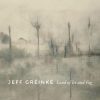
The artwork is remarkably appropriate. A dark, almost anonymous human silhouette occupies the left side of a blurred environment dominated by muted violet, blue and grey. Instead of presenting Suzanne Perry in a conventional portrait, the figure becomes something closer to an absence or memory.
The elegant cream-coloured scripted name across the lower section creates the only immediately precise visual element. Everything else is uncertain.
The image therefore mirrors the record’s production philosophy: recognisable forms appear through diffusion rather than sharp definition.
Even the apparent movement of the figure matters. It looks less like somebody posing than somebody passing through the frame.
For an EP concerned with return, memory, reconstruction and the continuation of an artistic voice across decades, that visual ambiguity is exceptionally effective.
HISTORICAL SIGNIFICANCE
Suzanne Perry’s return matters beyond the simple fact that another record has appeared. Her original work with Love Spirals Downwards formed part of a specifically American development of ethereal wave and dream pop in the early 1990s. Projekt’s relationship with that scene was equally important; the label originally released Idylls in the United States in 1992.
Perry later continued through Melodyguild and other collaborations, while this new material reconnects her with Projekt. Projekt itself describes the 2026 recordings as her return after a long absence. Yet There’ll Be No More Promises succeeds because none of that history is necessary for the music to function. The history adds depth. It does not provide life support.
FINAL ASSESSMENT
Suzanne Perry’s There’ll Be No More Promises is a small record with a surprisingly large historical and emotional circumference. Three tracks are enough. The first establishes the present. The second reconstructs the past. The third allows an older collaboration to emerge again in a new context.
Across approximately ten minutes, Perry and Miller demonstrate that ethereal music does not require excessive ornamentation to create scale. Their strongest instrument is often restraint: a sustained vocal, a guitar allowed to decay, a synthesizer texture that remains at the edge of perception, or silence left untouched. Most importantly, Suzanne Perry does not sound as though she has returned merely to prove she can reproduce the past. She sounds interested in what happens after it. And that makes There’ll Be No More Promises considerably more interesting than a conventional comeback record. It is not an attempt to turn the clock backwards. It is an acknowledgement that the clock never stopped.
REVIEW VERDICT: A beautifully controlled return — intimate, atmospheric, historically aware and unmistakably alive.
The press sheet also confirms that Perry and Miller are working on additional material and that live performances are planned for the Pacific Northwest during fall 2026, with other territories still to be determined. -Gordon